

How to Care for Your ECWCS Cold Weather System
ECWCS isn’t fragile gear — but it is technical gear.
When it works, it works quietly. When it fails, it usually does so without obvious warning. Insulation slowly loses loft. Shells stop shedding moisture. Breathable layers stop breathing. None of this happens all at once, and most of it is caused by improper care rather than hard use.
Taking care of your ECWCS system isn’t about keeping it looking new. It’s about preserving performance. The goal is simple: keep moisture moving, keep insulation dry, and keep materials doing the job they were designed to do.
Take Care of Your Gear So It Takes Care of You
Cold weather gear doesn’t get a second chance. Once insulation gets wet or compressed, warmth drops fast. Once shells stop shedding moisture, heat loss increases.
ECWCS was designed to manage cold, wind, and moisture as a system. That system only works if each layer is cared for properly. Good habits extend service life and preserve performance. Bad habits quietly undo the engineering.
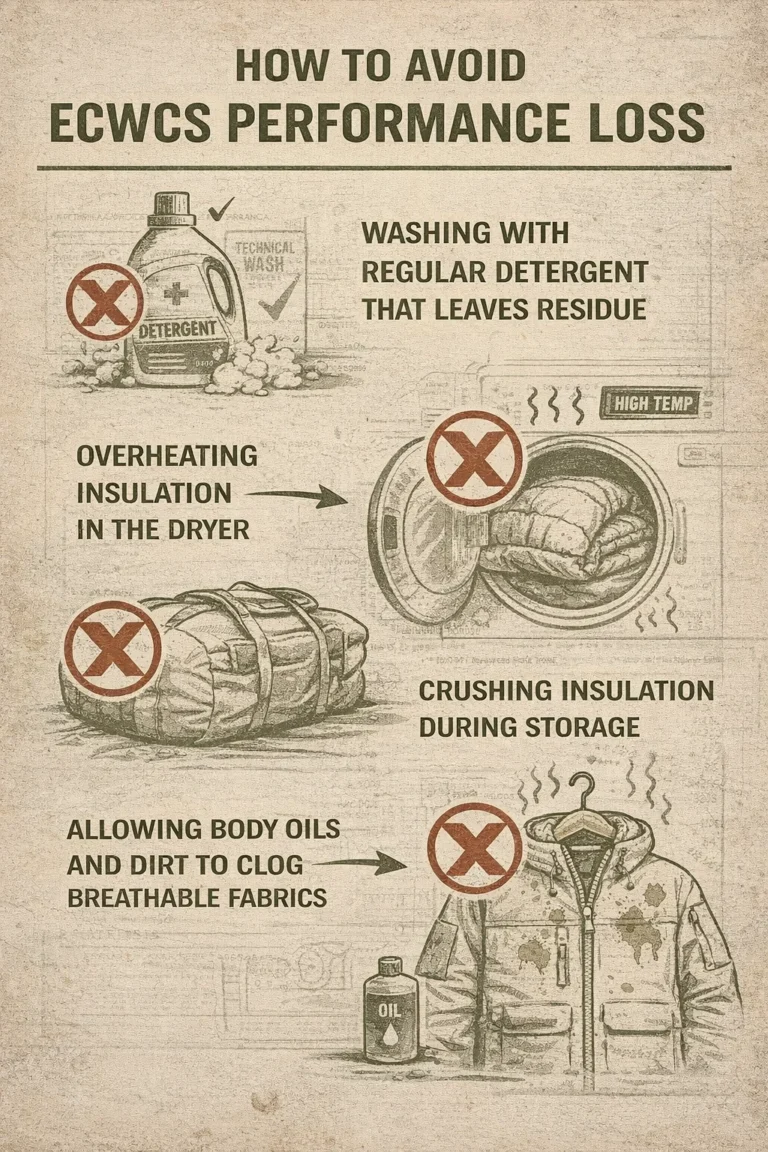
How to Avoid ECWCS Performance Loss
Most ECWCS performance loss doesn’t come from rips, tears, or visible damage. It comes from slow, preventable mistakes:
- Washing with regular detergent that leaves residue
- Overheating insulation in the dryer
- Crushing insulation during storage
- Allowing body oils and dirt to clog breathable fabrics
None of these failures are dramatic. But over time, they reduce warmth, breathability, and weather protection. The system still looks fine — it just doesn’t work as well when conditions turn harsh.
Washing ECWCS Layers: What Changes by Level
Not all ECWCS layers should be treated the same. Materials and construction vary by level, and washing them incorrectly is one of the fastest ways to degrade performance.
Base Layers (Levels 1–2)
- Wash regularly to remove sweat, oils, and dirt
- Use mild, non-residue detergent
- Avoid fabric softeners entirely
- Wash cold or warm, gentle cycle
Dirty base layers trap moisture against the skin and undermine the entire system.
Insulation Layers (Levels 3 & 7)
- Wash only when necessary
- Use gentle cycle with minimal detergent
- Avoid high heat
- Never dry clean
Insulation depends on loft. Aggressive washing and overheating collapse air spaces and permanently reduce warmth.
Shell Layers (Levels 4 & 6)
- Wash infrequently
- Dirt and oils reduce breathability and water repellency
- Use a technical wash designed for breathable shells
- Close all zippers and fasteners before washing
A dirty shell sheds less moisture than a clean one.
Drying ECWCS Gear the Right Way
Drying causes more damage to ECWCS gear than washing.
Base layers: Low heat or air dry
Insulation layers: Low heat only, or air dry when possible
Shell layers: Low heat helps restore water repellency, but avoid high temperatures
High heat damages insulation fibers and membrane laminates. When in doubt, lower heat and longer drying times are safer than rushing the process.
Shell Layers, DWR, and Water Repellency
Shell layers rely on Durable Water Repellent (DWR) treatments to shed moisture. Over time, DWR wears down due to dirt, abrasion, and repeated washing.
Signs DWR is failing:
Fabric darkens and wets out
Water stops beading on the surface
Breathability drops noticeably
Washing shells properly and using low heat can help reactivate existing DWR. Eventually, reapplication may be necessary, especially with surplus gear.
Field Habits That Extend ECWCS Gear Life
How you use ECWCS matters just as much as how you wash it.
Vent layers early to avoid sweating
Remove insulation during high output movement
Dry damp layers as soon as possible
Don’t sit or sleep compressed on insulation
ECWCS works best when layers stay dry and uncompressed. Small adjustments in the field prevent large problems later.
Storage Mistakes That Kill Insulation
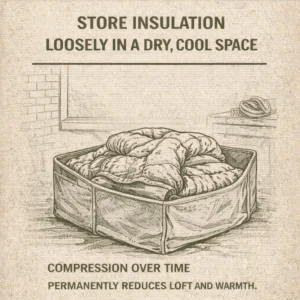
Long-term storage is one of the most overlooked causes of insulation failure.
Avoid:
Storing insulation compressed
Sealing damp gear in airtight containers
Leaving gear in hot vehicles for extended periods
When possible, store insulation loosely in a dry, cool space. Compression over time permanently reduces loft and warmth.
What to Expect From Surplus ECWCS Gear
Surplus ECWCS gear may already show signs of wear before you ever use it.
Common realities:
Reduced DWR on shell layers
Partial insulation compression
Minor staining or cosmetic wear
This doesn’t make surplus gear unusable, but it does mean care matters even more. Proper washing, drying, and storage can restore or preserve much of the remaining performance.
ECWCS Care Quick Reference Table
| Layer Type | Wash Frequency | Drying Method | Storage Notes |
|---|---|---|---|
Base Layers (L1–L2) |
Regular |
Low heat / air dry |
Clean & dry |
Insulation (L3, L7) |
Minimal |
Low heat only |
Store uncompressed |
Soft Shell (L5) |
Occasional |
Low heat |
Dry before storage |
Hard Shell (L6) |
Infrequent |
Low heat |
Clean to maintain breathability |
Keep Your Cold Weather Gear WORKING
ECWCS works because it manages moisture, insulation, and exposure as separate problems. Caring for the system keeps those layers doing their jobs instead of quietly working against each other.
If you’re building, maintaining, or replacing parts of your setup, you can explore our selection of military cold weather gear here. Treated properly, this gear lasts — and more importantly, it keeps working when conditions don’t give you room for mistakes.